Most people think rosacea is just about redness or sensitivity on the surface. But in truth, it runs much deeper. Rosacea is not simply a skin problem, v it is a sign that several internal systems of the skin are struggling to stay balanced. Beneath what we see as flushing or irritation, there are hidden networks at play: the tiny blood vessels, the immune system, the living skin microbiome, and the skin’s own defence wall often called the barrier. When one of these systems weakens, the others soon follow.
At RootsGuard, we believe that calming rosacea for good means going beyond the symptoms. It means understanding what drives them and supporting the skin where it’s natural intelligence has been disrupted. In this article, we’ll explore these known core dysfunctions one by one, so you can finally see why rosacea flares happen and what your skin has been trying to tell you all along.
In rosacea, the first system that loses balance is the network of tiny blood vessels. These capillaries open too easily and stay open too long, flooding the skin with warmth and redness. Over time, their walls become fragile, leading to constant flushing and visible veins.
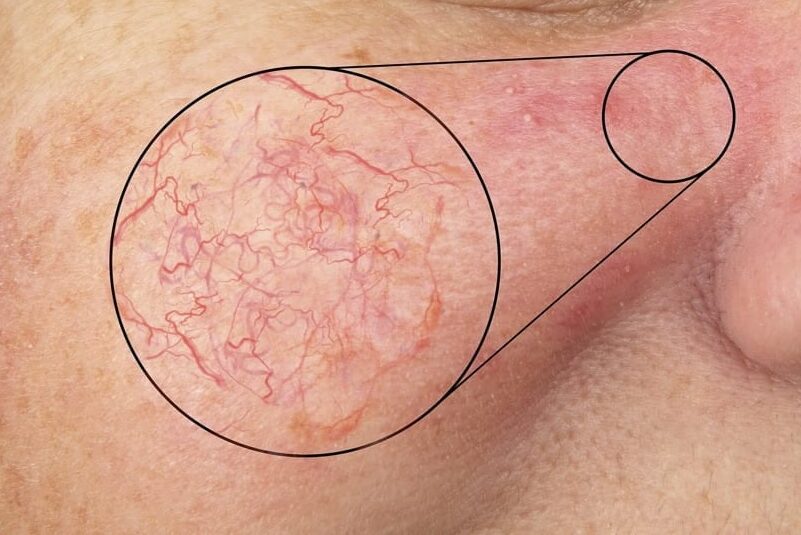
This overreaction, called vascular dysregulation, means the vessels no longer know when to calm down. Sun, heat, stress, or spicy food can instantly trigger them to expand, making the skin feel hot and sensitive. As these flushes (overreactive blood vessels) repeat more and more often, the skin barrier weakens, leaving deeper layers of teh skin exposed to irritants and temperature changes. This is where we have to build back the resilience of the skin, help it calm and feed its necessary nutrients to rebuild back its protective barrier and be less exposed/sensitive, and only then approach it with activities/cosmetics to help it recover even further.
RootsGuard Insight: Ingredients like Diosmin, Ruscus Root Extract, and Centella Asiatica (Cica) work together to improve micro-circulation, reinforce the vessel walls, and help the skin restore its natural balance. (you can see some Key Studies & Evidence below in the end of the article) When the vascular system regains its rhythm, redness begins to fade, and the skin finally feels cool and steady again.
In rosacea, the immune system lives in constant “alert mode.” It reacts as if under attack, even when nothing harmful is present. This overreaction starts with sensors on the skin called Toll-like Receptor 2 (TLR2). When these sensors become too active, they trigger the release of cathelicidin peptides—natural antimicrobials meant to defend the skin. But in rosacea, they turn overly aggressive, creating inflammation instead of protection.
External heat, sunlight, and emotional stress can activate TRPV1 receptors (the skin’s heat-sensing nerve switches). These receptors normally sense warmth and send signals that widen blood vessels, but in rosacea they become overactive, causing the vessels to open too easily and creating stronger, more frequent flushing. At the same time, serine kallikreins (the skin’s protein-cutting enzymes) become elevated and break down the skin’s protective balance. This increases inflammation, leading to persistent redness (erythema) and visible surface veins (telangiectasia).
RootsGuard Principle: rosacea skin doesn’t need its defenses silenced — it needs them retrained. Our goal is to calm these “fire alarms,” not to switch them off. Natural actives like MSM, Green Tea Extract, and Centella Asiatica help teach the skin to protect without attacking itself, bringing back a steady, peaceful rhythm. (you can see some Key Studies & Evidence for this below in the end of the article)
Your skin isn’t just made of cells — it’s also home to millions of friendly microbes that protect it every day. This invisible layer, called the skin microbiota, acts like a living shield. These good microbes talk to your immune system and teach it when to defend and when to stay calm. When they are balanced, they keep inflammation low and harmful bacteria under control.
In rosacea, this balance breaks. The skin loses microbial diversity, meaning there are fewer types of good bacteria and more of a few dominant, stress-loving ones. When this happens, the immune system starts to misread signals — it sees even harmless microbes as threats.
At the same time, tiny skin mites called Demodex folliculorum (normal skin mites everyone has) begin to multiply too quickly. In rosacea, they can overgrow and carry bacteria like Bacillus oleronius, which release irritating proteins that trigger inflammation. Even, usually harmless microbes such as, Staphylococcus epidermidis (common skin bacteria) can switch into an irritating, inflammation-promoting form under heat, stress, or barrier damage.
This microbial imbalance acts like a broken thermostat for the immune system. It keeps the skin’s defenses switched on all the time, causing redness, bumps, and that familiar burning or stinging feeling.
RootsGuard Approach: instead of using harsh antibacterial agents that wipe everything out, we work to restore microbial peace. Natural allies like Propolis, Lactobacillus Ferment, and Black Cumin Seed Oil help good microbes reclaim their space, quiet the skin’s overreaction, and rebuild the sense of harmony that healthy skin normally have.
As mentioned above, when the skin’s defense wall — often called the skin barrier — becomes weak, everything else starts to spiral. This barrier is made of natural lipids like ceramides, cholesterol, and fatty acids that keep moisture in and irritants out. When it’s intact, your skin stays calm and hydrated. But when it’s stripped or unbalanced, redness, stinging, and dryness appear fast.
In rosacea, chronic inflammation, harsh cleansers, and strong actives slowly wear down this protective layer. Overwashing, alcohol-based toners, and foaming gels remove the skin’s natural oils and disturb its slightly acidic pH. This creates what you can imagine as an “open gate” effect for irritants, pollution, and even normal microbes can now pass through and trigger immune flare-ups.
Many conventional products make things worse by using preservatives or synthetic ingredients that quietly irritate the skin over time, keeping it stuck in a constant, low-level state of inflammation. Visit the RootsGuard RosacalM+ Gel Cleanser product page and open the Learning Ingredients tab just below the introduction. There, every ingredient is explained, what it does, why it’s included, and where it comes from, so you can start understanding what you allow to touch your skin.
If it’s easier, you can also copy any ingredient list and paste it into OpenAI (ChatGPT) or another analysis tool to ask for a breakdown. The more you learn, the more power you have to choose what truly serves your skin.
Repairing this barrier isn’t just about coating the skin with heavy creams. True repair means restoring the right lipid balance and supporting the skin rebuilding process of its own protection from within.
RootsGuard Insight: ingredients like Panthenol (Pro-Vitamin B5), Beta-Glucan, Tremella and Sodium PCA hydrate deeply while teaching the skin to hold water naturally. At the same time, gentle plant lipids like Squalane and Centella support repair and calm irritation. Barrier repair, in the RootsGuard view, means more than moisture, it means calming, protection, and lipid intelligence, allowing the skin to remember how to defend itself again.
Every day, your skin faces invisible stress from sunlight, pollution, heat, and even emotional tension. These pressures create unstable molecules called free radicals. When too many build up, they start stealing energy from healthy skin cells – this is known as oxidative stress.
In rosacea, this stress happens much faster. Damaged skin cells and overactive blood vessels produce even more free radicals, creating a cycle of irritation and redness. Over time, this weakens the skin’s resilience, dulls its tone, and speeds up visible aging.
Inside each skin cell, tiny structures called mitochondria generate the energy that keeps the skin functioning and resilient. When oxidative stress builds up, these energy centers weaken, and the skin becomes more reactive, slower to repair, and easily inflamed.
To stop this cycle, the skin needs antioxidants that can neutralize these free radicals before they cause harm. That’s why they are called anti-oxidants, I am sure youve heard this word many times but may be didnt know how it works in skincare.
Normally, your body makes its own defense enzymes, called SOD (superoxide dismutase) and catalase, but when rosacea flares, they can’t keep up.
RootsGuard Focus: plant antioxidants help close this gap naturally. Green Tea (EGCG), Silymarin (from Milk Thistle), Licorice Root (Glabridin), CoQ10, and Astaxanthin, key active ingredients used in the SoloPaola Line, work to diffuse oxidative heat, strengthen the skin’s cellular energy system, and interrupt the chain reactions that lead to redness and premature aging.
The goal is not to block damage temporarily, but to build deep resilience, teaching the skin to remain stable and composed even under daily environmental stress.
Hormonal shifts, stress hormones, and nerve activity can all change how the skin behaves.
When estrogen levels drop or fluctuate, the tiny blood vessels in the face become more reactive. At the same time, high cortisol (the stress hormone) increases inflammation and weakens the barrier’s ability to retain moisture. Emotional tension or anxiety can activate the sympathetic nervous system, releasing neuropeptides such as Substance P and CGRP that dilate blood vessels and trigger that familiar flush or burning sensation.
This connection between the mind, nerves, and skin is called the neurogenic pathway. It explains why stress, embarrassment, or even rapid temperature changes can cause instant redness, the nerves literally send inflammatory messages straight to the vessels.
RootsGuard Perspective: lasting calm begins by soothing both the skin and the system behind it. Ingredients such as MSM, Panthenol, Centella Asiatica, and adaptogenic extracts like Ashwagandha support this internal-external balance. When the nervous system and the skin communicate in harmony, the complexion regains its steadiness and natural composure.
Rosacea is often linked to what happens in the gut. The digestive tract holds a vast microbial ecosystem that constantly communicates with the immune system. When this balance is disturbed, it can send inflammatory signals throughout the body, including the skin.
Research has shown that people with rosacea often have a higher presence of Helicobacter pylori, a bacterium that can irritate the stomach lining and trigger a chain of immune responses leading to facial flushing and inflammation. Disruptions in the intestinal microbiome can also increase intestinal permeability, allowing bacterial byproducts to enter the bloodstream and overstimulate the skin’s defense system. (for more information about this fact you care read these visit these studies and reviews: PubMed review on H. pylori and rosacea, 2024 PLOS ONE meta-analysis, Lazaridou et al. review on links and risks, JAMA Dermatology clinical study on H. pylori treatment, and the Frontiers in Microbiology paper on the gut–skin axis.)
Another link is the plasma kallikrein-kinin system, which can be activated by intestinal bacteria and contributes to vascular dilation and the heat response seen in rosacea flares. (for more information about this fact you care read these visit these studies and reviews: Role of the Skin Microbiota and Intestinal Microbiome in Rosacea, Rosacea and the Microbiome: A Systematic Review, Rosacea, Microbiome and Probiotics: The Gut–Skin Axis, Causal Relationship Between Gut Microbiota and Rosacea )
RootsGuard Perspective: restoring gut harmony helps the skin stay calm. While topical care targets visible inflammation, a clean, balanced diet rich in fiber, polyphenols, and fermented foods supports the internal microbiome that keeps the skin clear and steady. True rosacea healing begins when both the gut and the skin’s ecosystems are being restored.
Rosacea is not caused by one single problem. It’s the result of several internal systems falling out of sync — the vascular network, the immune response, the microbiome, and the barrier all influence one another. When one weakens, the others follow.
For example, when the microbiome loses balance, the skin becomes inflamed. That inflammation then damages blood vessels, which increases redness and heat. This heat, in turn, further weakens the barrier, letting more irritants in and feeding the same cycle again.
This constant feedback loop explains why short-term treatments rarely bring lasting relief. Unless the entire system is rebalanced, the same symptoms will keep returning under a new form — redness, burning, breakouts, or sensitivity.
The RootsGuard approach is designed to support and comfort these systems so the skin can appear calmer, stronger, and more resilient over time. Here’s how RootsGuard’s multi-pillar approach addresses the core dysfunctions you’ve just learned about:
| Skin Concern | RootsGuard Support | Key Natural Actives |
| Visible redness & flushing | Helps improve skin comfort and even tone | Diosmin, Ruscus Root, Horse Chestnut, Centella Asiatica |
| Skin sensitivity | Soothes and reduces visible signs of stress | MSM, Green Tea (EGCG), Bakuchiol, Centella |
| Microbiome imbalance | Promotes a balanced skin ecosystem | Propolis, Lactobacillus Ferment, Black Cumin Seed Oil, Inulin |
| Dryness & barrier fragility | Replenishes essential lipids and moisture | Beta-Glucan, Panthenol, Squalane |
| Environmental stress & dullness | Provides antioxidant protection | CoQ10, EGCG, Silymarin, Astaxanthin |
| Stress & hormonal sensitivity | Supports skin comfort under stress | Adaptogens, Panthenol, calming botanicals |
| Lifestyle balance | Encourages internal–external harmony | Gut-friendly nutrition, polyphenols, probiotic foods |
Our formulas in the SoloPaola line combine these natural actives in synergy to help skin feel balanced, hydrated, and visibly calmer.
At RootsGuard, we believe that when the skin is supported on every level, it naturally returns to its state of ease and resilience. Closing Thought: rosacea is not a mystery condition — it’s the skin’s message that its internal systems have lost synchronicity. When we treat the roots, not just the symptoms, the skin can remember peace again.
| Ingredient / Topic | Study / Source | Key Finding / Relevance |
| Diosmin | Potential and Therapeutic Roles of Diosmin in Human – PMC | Venoactive bioflavonoid improving microcirculation, lymphatic flow, and reducing oxidative and inflammatory stress. |
| Effects of Diosmin on Vascular Leakage and Inflammation – Frontiers | Reduced blood vessel leakage and inflammation, showing support for vascular integrity. | |
| Anti-inflammatory and Antiradical Effects of a 2% Diosmin Cream – Wiley | Topical diosmin demonstrated antioxidant and anti-inflammatory effects in skin models. | |
| The Effect of Diosmin, Escin, and Bromelain on Human Endothelial Cells – MDPI | Modulates nitric oxide, reduces TNF-α and IL-6, and supports endothelial health. | |
| Centella asiatica (Cica / Gotu Kola) | Pharmacological Effects of Centella asiatica on Skin – PMC | Confirms wound-healing, collagen-stimulating, and anti-inflammatory properties. |
| Review of 85 Papers on Centella asiatica’s Skin Benefits – LipoTherapeia | Summarizes human and cell studies; 0.05% extract improved erythema post-laser. | |
| Antioxidant and Cytotoxic Activities of Centella asiatica – Semantic Scholar | Identifies strong antioxidant and phenolic compounds. | |
| Role of Food Supplementation in Microcirculation – MDPI | Includes Centella and Ruscus among botanicals improving microcirculation. | |
| Ruscus aculeatus (Butcher’s Broom) | Botanicals for Chronic Venous Insufficiency – ResearchGate | Ruscus improves capillary permeability and venous tone in chronic venous disorders. |
| Role of Food Supplementation in Microcirculation – MDPI | Demonstrates venotonic and endothelial-protective activity. | |
| MSM (Methylsulfonylmethane) | MSM Inhibits NLRP3 Inflammasome Activation – ScienceDirect | Reduces pro-inflammatory cytokines and inflammasome activity. |
| MSM Protects Against UV-Induced Photoaging – PMC | Prevents UV-related oxidative stress and damage in skin. | |
| Oral MSM Improves Skin Wrinkles and Elasticity – ResearchGate | Human trial: improved hydration, firmness, and wrinkle depth. | |
| MSM + Sericin Synergistic Anti-Inflammatory Activity – MDPI | Combined extracts reduce NF-κB, COX-2, and iNOS expression. | |
| Green Tea (EGCG) | EGCG Reduces Rosacea-Like Inflammation – PMC | EGCG reduces inflammation via autophagy activation in keratinocytes. |
| Topical EGCG Reduces Telangiectasia and VEGF – PubMed | 2.5% EGCG cream reduced visible veins and inflammatory markers. | |
| 2% EGCG Cream for Papulopustular Rosacea (Phase III Trial) – JAAD | Double-blind, placebo-controlled study showed clinical improvement. | |
| Green Tea Protects Against UV-Induced Erythema – MDPI | Demonstrates antioxidant and photoprotective action. | |
| Propolis | Propolis as a Novel Antibacterial Agent – ScienceDirect | Broad-spectrum antibacterial and synergistic with antibiotics. |
| Antibacterial and Antioxidant Potential of Propolis Against Skin Pathogens – ResearchGate | Inhibits Staphylococcus spp. and provides antioxidant protection. | |
| Propolis Modulates Gut Microbiota and Barrier Proteins – PubMed | Improves gut microbial diversity and intestinal barrier integrity. | |
| Dynamic Pharmacological Potency of Propolis – SpringerLink | Anti-inflammatory, wound-healing, and immunomodulatory effects. | |
| Propolis Suppresses UV-Induced Photoaging in Human Skin – PMC | Prevents UV-induced collagen breakdown and supports barrier function. |
Rosacea is driven by a combination of internal skin imbalances — including vascular overreactivity, immune sensitivity, microbiome shifts, and weakened barrier function. These systems constantly influence one another, which is why redness, flushing, or sensitivity often return unless all are supported together.
No. While dilated blood vessels play a key role, rosacea also involves immune overactivation, oxidative stress, and microbiome imbalance. Addressing only circulation without calming inflammation or repairing the barrier usually brings temporary results.
The skin’s microbiome acts as a living shield, keeping harmful microbes in check. When beneficial bacteria decline and species like Demodex or Staphylococcus epidermidis overgrow, they can overstimulate the immune system and worsen redness or bumps.
Stress activates nerve messengers such as Substance P and CGRP, which expand facial blood vessels and heat the skin. This neurogenic response is why rosacea often flares during emotional tension or sudden temperature changes.
Yes. Studies show that imbalances in the gut microbiota and certain bacteria like Helicobacter pylori can increase systemic inflammation and trigger vascular reactivity in the skin. A balanced, fiber-rich diet with probiotic foods can help support skin calmness from within.
Oxidative stress from UV light, pollution, or emotional tension leads to excessive free radicals that damage vessels and slow cell repair. Antioxidants like Green Tea (EGCG), Silymarin, and CoQ10 help neutralize this stress and support stronger, steadier skin.
When the skin barrier loses lipids such as ceramides and fatty acids, irritants can enter more easily, triggering redness and discomfort. Strengthening this barrier with ingredients like Panthenol, Beta-Glucan, and Squalane helps the skin maintain hydration and resilience.
Yes, when chosen carefully. Botanicals such as Centella Asiatica, MSM, and Propolis have shown soothing, antioxidant, and microbiome-supportive properties that reduce visible redness and sensitivity without harsh side effects.
Rosacea is a chronic condition, but its visible effects can be significantly minimized. By restoring balance across the skin’s vascular, immune, and barrier systems, the complexion can remain calm and even for long periods with proper care.
RootsGuard focuses on systemic balance — addressing vascular stability, microbiome harmony, barrier strength, and oxidative resilience together. Each formula uses biomimetic actives chosen for compatibility with sensitive, rosacea-prone skin, supporting visible calm and long-term skin health naturally.
